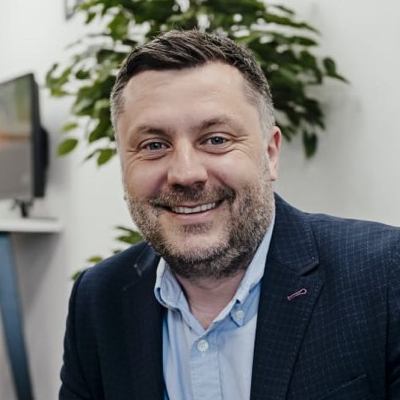

Integrating offshore and onshore teams
How Phil Ellerby of Northern Accountants integrated his offshore and onshore teams for scalable growth
Phil wanted to expand his team capacity without the high cost of UK-based recruitment. His goal was to find a high-quality team member who could take on time-consuming yet vital tasks, freeing him to focus on higher-value work.
Unable to find or afford the right onshore talent, Phil turned to offshore staffing as a solution - but quickly realised that hiring offshore was only the first step. The real challenge lay in integrating the offshore team with the onshore staff effectively.
Initial Challenges
Phil initially expected near-perfect results from his offshore partners but hadn't established consistent processes or communication frameworks. This led to mismatched expectations and frustration on both sides.
"If you don't educate and communicate, you can't get good results."
To spread risk, Phil started by working with four different outsourcing providers, each with its own UK contact point. However this setup created complexity and inconsistency, ultimately limiting scalability.
Building a unified offshore-onshore system
Phil eventually consolidated his approach, building a leadership team for his offshore staff that worked closely with the UK team. Today, he has 18+ staff with Corient, with all production work handled and reviewed in India before a final review in the UK.
Importantly, there are now no processing staff based in the UK which is a real testament to the maturity and trust in the offshore operation. Corient recruits and employs the team, but the team only work on Northern Accountants clients and they do so the Northern Accountants way. All the HR is managed at Corient's end which Phil prefers to hiring the team directly.
To bridge the gap between teams, Phil invested heavily in communication and collaboration systems:
- Google Docs and Slack for real-time collaboration.
- A Training Academy for structured learning.
- Training videos and CRM software to manage workflow and quality control.
The teams operate across different time zones, but by setting mutually agreed deadlines and overlapping working hours, collaboration is seamless and efficient.
Training and development
Phil adopted a "train the trainer" approach, initially leading sessions by video with regular assessments. Both UK and offshore teams go through structured training, supported by the Training Academy, to ensure consistency across every process.
A Quality Board oversees feedback and performance, providing continuous insights to the offshore leadership team to drive ongoing improvement. This central board, integrated within Northern Accountants' Monday CRM system, tracks rejection reasons and identifies key areas for enhancement. Built-in links connect directly to individual jobs across the entire workflow process, ensuring that feedback and improvement actions are captured in real time - rather than retrospectively or as justifications for budget overruns. This proactive approach has steadily reduced review times and raised quality standards.
Business Impact
Offshoring has had a significant positive impact on margins, freeing up cash to reinvest in UK-based staff development and business growth.
Phil highlights that outsourcing isn't attractive because it's cheap - it's attractive because it enables over-resourcing, which gives the team breathing room to plan strategically.
The offshore team now handles cashflow forecasts, management accounts, and other production tasks, while the UK team focuses on client-facing interpretation and advisory work.
"On-time delivery is key — and Quality Boards ensure continuous improvement."
Lessons Learned
At the start of this journey, Phil abdicated responsibility for offshore work, assuming tasks would be completed autonomously. He learnt the hard way that success requires active management, communication, and integration.
"If what comes back isn't right, it's because you weren't clear enough about what you want."
By fostering inclusion and communication - such as weekly team huddles and appointing an offshore coordinator - Phil transformed collaboration and morale.
Key Takeaways
- Hiring offshore is only the first step - integration and communication drive success.
- Document processes meticulously to ensure clarity and consistency.
- Invest in training and leadership to build capability and independence.
- Quality and feedback loops are essential for continuous improvement.
- Outsourcing is a growth enabler, not just a cost-saving tactic.