

This article provides insight into reviewing sustainability information which is included as part of the annual report. This is covered in syllabus area D of the Professional Diploma in Sustainability. Assurance on sustainability information under the International Standard on Sustainability Assurance 5000 is covered in the two articles titled ‘An introduction to the International Standard on Sustainability Assurance 5000’.
Introduction
Auditors may be asked to complete assurance engagements on non-financial information, and this is likely to include the review of management reports on social, environmental and sustainability information. This type of information is known as Extended External Reporting (EER), which is a requirement for listed and larger private companies in some jurisdictions. Many companies are now providing additional information on the environmental impact of their operations.
There are challenges in undertaking such engagements and this can be a highly specialist area. However, there are steps the firm can take to mitigate these challenges, and providers must ensure they comply with professional standards on independence, quality management, and ethics.
This article considers the main reasons why companies produce and report this information and the various methods of measurement used. Auditors may be asked to review the information as part of their review of the annual report, or as a separate assurance engagement.
Why is there a need for companies to report sustainability information?
1. National reporting requirements: Some regions require larger, listed entities or those in specific industries to report on their environmental, social and governance information. Examples of these reporting requirements include:
- Corporate Sustainability Reporting Directive (CSRD) – this EU legislation requires all large companies (companies with over 1,000 employees and net annual turnover of over €450 million) to publish reports aligned with the European Sustainability Reporting Standards.
- Task Force on Climate-Related Financial Disclosures (TCFD) – UK premium listed companies must report their compliance with the TCFD recommendations.
2. Stakeholder needs: Increasingly stakeholders, especially larger investors like pension funds, are demanding more information of the impact of a company on the environment and society.
3. Voluntary disclosure: Companies may seek to gain a competitive advantage by declaring their ‘green credentials’ or to access green finance.
Companies can choose to include sustainability information within their annual report or to produce stand-alone reports on social, environmental and sustainability matters. In the last decade, Integrated Reporting <IR> has become common, which aims to provide a holistic view of the company’s financial and non-financial performance and its potential for long term value creation.
Measuring and reporting on environmental, social and sustainability information
The measurement of specialised information can be problematic, because sustainability or environmental indicators may be reported in different ways even within the same industry and different reporting standards may be applied. It is vital to understand what is being reported upon and why (legislative or commercial reasons), as well how information is obtained, collated and presented.
Comparison between companies and industries is challenging for the following reasons:
- Rapidly changing requirements and disclosure principles.
- Diversity of subject matter.
- Multiple reporting frameworks for non-financial information.
- Additional risk of management bias due to the subjective nature of measurement and selection of the criteria being presented.
- Variety of different key performance indicators (KPIs) and metrics used.
Sustainability information can be presented in different ways, one company may produce a table of financial information to report information, whereas another may report using non-financial or narrative disclosures. Comparison between companies, even within the same industry, is problematic due to the lack of consistency in selecting which measures to disclose, how the information is presented and how metrics are quantified.
Sustainability information can include details on:
- Greenhouse gas emissions (GHG)
- Waste minimisation and management
- Finite resource consumption (oil, gas, coal, minerals, forestry)
- Supply chain sustainability
- Water and pollution
- Employee welfare and equality
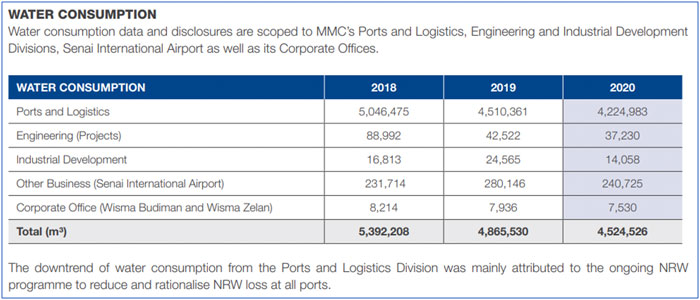
Below is an example of a water consumption disclosure included in BASF’s 2025 Combined Management’s Report:1
In 2023, the International Sustainability Standards Board (ISSB) issued two global sustainability standards, known as the IFRS® Sustainability Disclosure Standards, (IFRS S1, regarding general sustainability-related disclosures and IFRS S2, regarding climate-related disclosures), creating a comprehensive global baseline of sustainability disclosures for capital markets.
Considerations when planning an assurance engagement
As with any assurance engagement, the auditor should consider the impact of risk on the planning and performance of the engagement. Sustainability information may be included in the annual report alongside the financial statements. This creates an expectation gap risk, as some users expect that all information in an annual report is subject to a detailed assurance process by the auditor (beyond what is expected of ISA 720 (Revised) The Auditor’s Responsibilities Relating to Other Information). Where sustainability information is included, it is vital for the assurance provider to clearly state in their letter of engagement, as well as in their auditor’s report on the financial statements, the limitations of their assurance work.
Review of non-financial information which is part of the annual report (such as the strategic report)
Guidance on the review of non-financial information as part of the annual report is covered by ISA 720 (Revised). Auditors need to consider whether there is a material inconsistency between the other information and the financial statements.
Auditors should consider all auditing standards, but a few key ones which may be relevant to the review of other information are:
ISA 540 (Revised) Auditing Accounting Estimates and Related Disclosures
- Management bias – this may arise in both the calculation and the disclosure of sustainability information, especially if the information is provided voluntarily by the company in order to gain a competitive advantage.
- Appropriateness of methods of calculation and whether the basis for estimations are reasonable and appropriate – this may be an issue where there are no industry standard measurements established and management is responsible for deciding on the parameters of the estimation.
ISA 250 (Revised) Consideration of Laws and Regulations in an Audit of Financial Statements
- If the requirement to report is required by legislation, there may be financial penalties or reputational issues for failure to report correctly for both the company and the auditor.
- If there has been a breach of regulations, for example if any required environmental disclosures are not given, there may be implications for the financial statements, such as provisions for fines. This increases audit risk. Breaches of laws or regulations may even impact the ability of the company to continue to trade, for example licences to trade may be subject to adhering to laws and regulations, or fines or penalties may be substantial enough to significantly impact the cash flow of an entity.
ISA 315 (Revised 2019) Identifying and Assessing the Risks of Material Misstatement
- Auditors need knowledge and experience of the industry and subject matter, this may be a highly specialised area. Independent experts may be required to assist in the assessment of specialist criteria, for example, greenhouse gas emissions, chemical levels in waste etc. or using an EER expert to manage the assurance process.
- There may be industry standard measurements which are used.
- Auditors need to consider the internal controls within a client to determine the reliance which can be placed on the information and whether this information is internally or externally generated.
- Information from third parties, these could include environmental bodies (governmental or private) and the reliance which can be placed on this information.
ISA 450 Evaluation of Misstatements Identified During the Audit
- Omissions of information, both financial and operational for example, the impact of business interruption due to pollution, environmental damage or industrial action by employees, suppliers or third parties, such as environmental protesters.
- Consideration of whether the omission of such information may affect the users of the financial statements.
This list is not exhaustive, and other auditing standards may need to be considered in order to obtain the relevant sufficient evidence in an engagement.
Reference:
- BASF’s Sustainability Statement 2025, E3 Water – BASF Report 2025
Adapted from an article written by a member of one of ACCA’s examining teams
