

From ambition to action: ACCA at Reset Connect
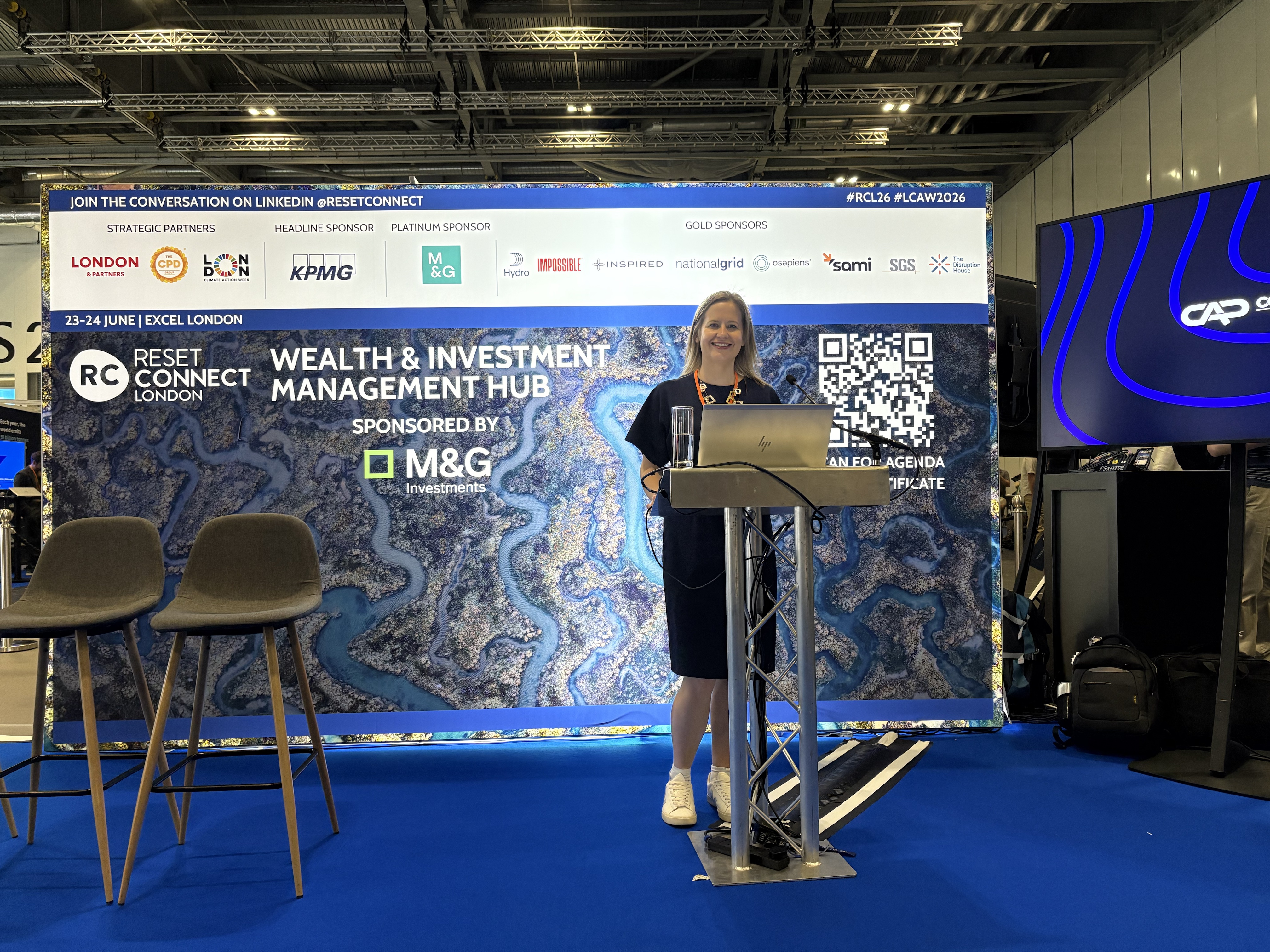
Reset Connect London, part of London Climate Action Week, brought together leaders from business, investment, policy and sustainability to explore how organisations can accelerate the transition to a more sustainable economy.
Across the event, a clear shift in emphasis was evident. The discussion is no longer centred on why sustainability matters, but on how it is embedded into core decision-making, governance and operations in ways that deliver measurable outcomes. Sustainability is increasingly recognised as integral to business resilience, capital allocation and long-term value creation rather than a standalone environmental agenda.
As regulatory expectations rise and stakeholder scrutiny intensifies, finance professionals are playing a more central role in enabling organisations to respond effectively. The profession’s expertise in measurement, assurance, risk management and performance provides a critical foundation for translating sustainability ambition into operational reality.
Against this backdrop, ACCA contributed two sessions exploring how the profession is helping organisations move from ambition to action
From ambition to action in sustainability
In the Wealth & Investment Management Hub, Emmeline Skelton, ACCA’s Head of Sustainability, explored how finance professionals can help close the gap between sustainability ambition and implementation.
Drawing on ACCA research developed with partners, she highlighted growing attention on internal controls over sustainability-related data. As sustainability becomes embedded in corporate strategy, the quality, integrity and reliability of non-financial information is becoming as critical as traditional financial reporting.
This reflects a wider shift in expectations. Organisations are increasingly reliant on sustainability data to demonstrate progress towards net-zero commitments, meet regulatory requirements and provide assurance to investors and other stakeholders. Weaknesses in governance and controls risk undermining both credibility and decision-making.
A consistent theme from Reset Connect was that sustainability can no longer be treated as a parallel reporting exercise. It must be embedded within core business planning, investment appraisal and performance management if it is to influence real-world outcomes.
Climate technology: enabling better decisions
Climate technology and artificial intelligence featured strongly across Reset Connect as practical enablers of improved sustainability performance.
For finance professionals, these tools are increasingly important in improving the quality, consistency and usefulness of sustainability data. Better data leads to better insight, and better insight supports better decision-making across strategy, risk and operations.
By leveraging climate technology, organisations can integrate environmental impacts into strategic planning, identify climate-related risks and opportunities earlier, improve resource allocation and enhance both sustainability reporting and financial analysis. As these technologies evolve, they are becoming embedded in how organisations manage transition risk and deliver decarbonisation strategies.
To support this shift, ACCA has developed the Climate Technology Readiness and Investment Toolkit, which provides a structured approach to embedding climate technology into strategy, finance and operations. The toolkit helps organisations assess readiness, strengthen data governance and build investment cases for climate solutions, supporting more resilient and informed decision-making. It is available via ACCA’s Climate Technology hub: The climate tech forecast: A guide to driving value across organisations | ACCA Global
Sustainable supply chains
ACCA also hosted an interactive workshop on sustainable supply chains, an area that featured prominently throughout Reset Connect.
The discussion reinforced that the most significant environmental and social impacts for many organisations sit beyond their direct operations. Alongside Scope 3 emissions, participants examined issues including human rights risks, modern slavery, water use, biodiversity impacts and responsible sourcing.
A central theme was the increasing need for visibility, assurance and accountability across complex global value chains. Organisations are seeking to better understand where materials originate, how workers are treated and how natural resources are managed, while strengthening their ability to identify and respond to risk.
Technology, including AI, is playing an increasing role in improving supply chain transparency and enhancing the quality of sustainability data. However, the discussion also reinforced that sustainable supply chains are not solely a compliance requirement. They are fundamental to operational resilience, reputation and long-term value creation.
Insights from the workshop will inform ACCA’s upcoming research on sustainable supply chains. Members and stakeholders who wish to contribute further are encouraged to get in touch with Emmeline.skelton@accaglobal.com and complete the accompanying survey
The scenarios nobody saw coming
Describing what happened when the attacks in Iran began, an ACCA member working at an oil and gas company in the United Arab Emirates put it bluntly: “Infrastructure quickly became a target – AWS services were hit and banking applications were down. I was speaking to someone in the [banking] sector asking how this could happen; why didn’t the bank have an alternate. They [the bank] had not paid attention; the risk was very remote to them.”
He said the lesson is that nothing can be treated in isolation: “From the accountancy perspective, it is not just about being aware, but acting, implementing and testing. Getting the information you need, not waiting for it to come to you."
Key themes from London Climate Action Week
Reset Connect formed part of a broader London Climate Action Week programme that brought together activity across climate finance, policy, innovation and nature.
Across the week, several consistent and interconnected themes emerged:
- A shift from ambition-setting to implementation and delivery, with organisations increasingly focused on execution and measurable outcomes
- Sustainability becoming embedded within core business and financial decision-making rather than operating as a parallel agenda
- Climate finance and transition investment remaining central to mobilising capital at scale for decarbonisation and resilience
- Growing recognition of nature, biodiversity and adaptation alongside emissions reduction, reflecting a broader understanding of systemic environmental risk
- The increasing importance of data integrity, assurance and interoperability in enabling credible reporting and informed decision-making
- The rapid development of climate technology and artificial intelligence as tools to improve transparency, efficiency and insight
- The critical role of collaboration across business, government, investors and professional bodies in overcoming systemic delivery challenges
Taken together, these themes reflect a sustainability agenda that is becoming more operational, more integrated and more focused on systems-level delivery and accountability.
The evolving role of the profession
Across Reset Connect and London Climate Action Week, one message was clear: the finance profession is central to how organisations respond to sustainability challenges.
As environmental and social considerations become embedded in business strategy, finance professionals are uniquely positioned to provide trusted data, strengthen governance and support robust decision-making. Their expertise in measurement, assurance, risk management and performance evaluation is increasingly essential in ensuring that sustainability commitments translate into credible action.
ACCA’s participation at Reset Connect reflects its continued commitment to supporting members in this transition. Through research, practical tools and thought leadership, ACCA is helping finance professionals build the capabilities needed to deliver sustainable value in a rapidly changing environment.
The discussions across the week made one point clear: sustainability is no longer peripheral to business strategy—it is central to it. As organisations move from ambition to implementation, accountants will remain at the heart of turning intent into impact.
Article written June 2026, London (UK)
""
