

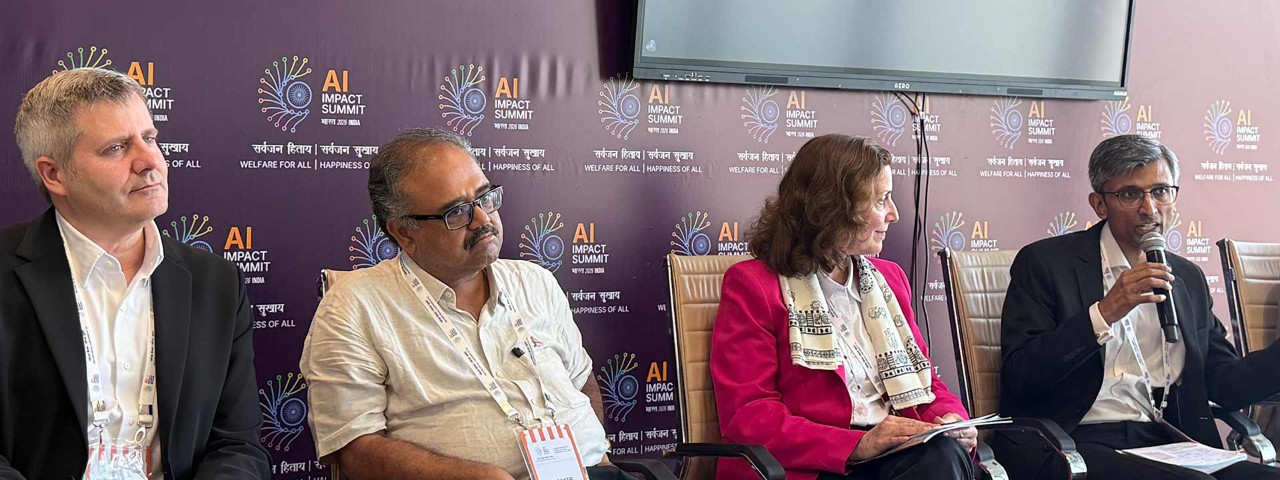
ACCA took part in one of the largest global gatherings on AI to highlight the importance of ethics, human oversight, and a common understanding of AI assurance as part of the solution to increase trust in AI.
One of the largest global gatherings on AI
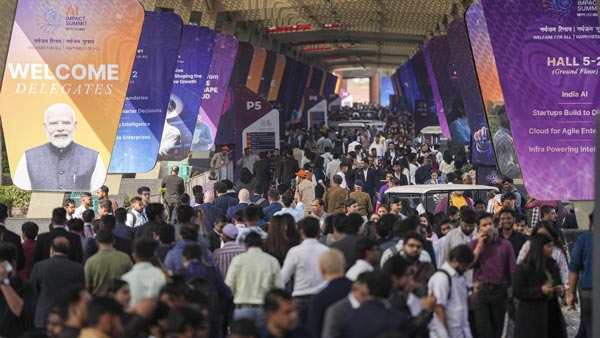
Held in New Delhi, from 16-20 February, the AI Impact Summit 2026 emerged as one of the largest global gatherings on AI. It was also the first summit of its kind to be hosted by a global south nation. The summit formed part of a series of high-level global summits on AI, following earlier landmark ones such as the UK AI Safety Summit at Bletchley Park, the Seoul AI Summit, and the Paris AI Action Summit. It brought together delegations from 118 countries, with the inaugural session attended by more than 20 heads of state and government, as well as 59 ministerial level representatives. It featured over 40 global and Indian tech CEOs and attracted over 500,000 participants across the summit and its associated events, representing a diverse community of policymakers, technology leaders, researchers, startups, and civil society organisations.
ACCA’s co-hosted AI assurance session
ACCA co-hosted a high-level policy session on the theme of Effective AI assessments, verification and assurance, in partnership with EY Global Public Policy and the Government of Singapore (IMDA), Singapore's digital transformation and tech regulator. ACCA was at the heart of high-level stakeholder dialogue, media interactions and key discussions with regulators and industry leaders, building on collaborative and strategic government engagement led by Sundeep Jakhar, head of public affairs. The session utilised a policy paper jointly developed by ACCA and EY entitled AI assessments: enhancing confidence in the use of AI and explored the following themes:
- Emerging policy and standards considerations for AI assessments, verification, and assurance
- Practical challenges faced by regulators and organisations in assessing and auditing AI systems
- The role of professional skills, qualifications, and ethics in enabling trustworthy AI
- The importance of international alignment and harmonisation of AI assessment standards
Insights on AI assurance
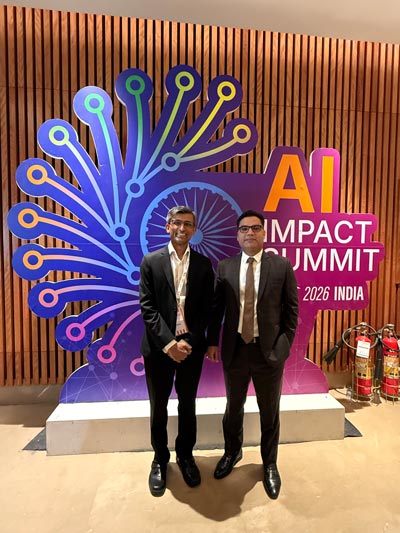
ACCA’s head of policy development, Narayanan Vaidyanathan, joined the session as a panellist. He spoke alongside panellists from EY Global Public Policy, IMDA, University of Oxford (also representing at the International Panel on the Information Environment), Mozilla Foundation and Indian Institute of Technology (IIT) Madras (also partnering closely with the Indian government on AI safety issues). The audience comprised representatives from government, industry, civil society, and academia. On behalf of ACCA, Narayanan made the case for a multifaceted approach to AI assurance: one that requires a shared understanding across technical teams, business functions, and regulatory bodies. And which seeks to professionalise the approach to AI assurance, placing ethics at the core and calling for globally consistent approaches as much as possible. He pointed to ACCA's efforts to build this shared understanding in practice, through ethics, AI and data science training for members and students, internal capacity building to ensure responsible use by ACCA, and ongoing advocacy for large-scale AI upskilling across the profession.
Safe and trusted AI and the role of accountants
The session was anchored in the summit's focus on safe and trusted AI and the broader people, planet, and progress agenda. These are themes that are increasingly central to how organisations, regulators, and policymakers are thinking about responsible technology adoption. As AI reshapes how decisions are made and value is created, the question of accountability is becoming urgent: who ensures it works safely and ethically? For professional accountants, this is familiar territory. The skills that underpin financial assurance, ethics, and governance are the right foundation for what AI assurance demands. The session explored how accountancy and finance professionals are uniquely positioned to contribute to trust in AI systems, the essential capabilities and skills they need to enhance trust in an AI-driven economy and why professionalising AI assurance as a discipline matters.