

Cerith Williams
Cerith is a director at Unity Accountancy
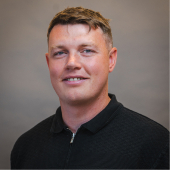
I was finishing school not knowing what to do but my cousin was doing accountancy through the apprenticeship route. I'd been pretty good at maths and computers, so together with my mother and brother we worked through the Yellow Pages to send out my CV to local practices. I got picked up by a firm in Port Talbot where I did my AAT and started my ACCA before moving to a practice in Carmarthen where I qualified. I spent nearly 10 years there before moving to a practice in Swansea, and as I was leaving Carmarthen a client asked why I didn't go self-employed. That client became my partner in Unity Accountancy with me doing the accountancy side and him doing the practice management side. I built it up in the background while still at Swansea, and my practising certificate came through that January.
The practice is now three years old and a year ago we acquired another practice which took us from 100 to 500 businesses, and from 3 to 11 staff. Incorporating that practice into ours is taking time – it was a legacy firm that was compliance-based and worked to deadlines but had no other interaction with its clients. Clients would drop off boxes of paperwork that the staff would type up into Excel – everything was done manually. We've trained the clients to use software like Dext, and the final piece is getting them onto practice management software. The staff have been great – two were long standing senior staff members who have run with every change we've put in and helped us. We're gradually moving that dial back away from deadlines into proactive year-end planning and we're making good progress.
There have been some difficult conversations with some of the acquired clients. With payroll, some clients were used to providing information with a phone call on a Monday morning or an email on Tuesday afternoon or being called by the accountant themselves for the information, but everything needed to become standardised and there was a bit of resistance. Some of the acquired clients had been undercharged in the first place and then not re-quoted for 10 years during which time they had grown significantly meaning more work for the practice – those are the hardest conversations. One client was paying around £10 a month – about 34p a payslip – for two directors on monthly payroll, even after they had grown to eleven weekly-paid staff over those ten years.
Taking on legacy practices and digitalising them is part of our business plan. I didn't realise it at the time but going into accountancy with a curiosity in IT has worked really well. With these legacy practices, I could create a separate micro client department to give our junior members of staff some exposure to develop them.
We're a general practice and we'll take on clients from any sector, but the ideal client is the one wanting an outsourced finance function. Any client coming on board will be on some sort of digital software and that opens gateways for us to automate their receivables and payments and take more and more work off the directors so they can work on the business while in the background with the tech and reporting, we know if there's something wrong in the business before they do if the data is kept up to date. Our construction client is a good example. They bill to a gross profit of 35% each month, so in theory the P&L should show 35% gross profit – but we've seen it swing anywhere from 70% to minus 30%. We break that down by project manager and put it visually in front of the director, so we can show who's performing, who isn’t, and who's inconsistent.
It's funny that the accountancy profession is seen as dull and boring, yet you see so many forward-thinking progressive accountants on LinkedIn. It really summed it up for me when we sent our non-accountant receptionist with the team to Accountex and she was shocked that it wasn't boring people in grey suits and that she went from party to party meeting lots of people and accounting celebrities and she really enjoyed it. So the perception is a challenge for the profession – accountants these days can do a lot more than just give clients a tax bill and clients are starting to expect that. We've picked up quite a few clients that want their accountant to do more so we're somewhere between the traditional accountant and software and IT and business consultancy. Those are the three points of a magic triangle, and the new accountant sits right in the middle of it – the trusted advisor, with links into all the other professions.
Away from work I have a young family – a six-year-old, a four-year-old, and a new-born. I’m also treasurer of the Jac Lewis Foundation – a mental health charity that started in Ammanford and now operates nationally, for which Unity runs the outsourced finance function as a donated service – and a director on the board for the local football club Ammanford A.F.C. I played for Ammanford up until the fourth knee operation – I even played in the topflight myself once – after which the doctor told me I shouldn't play anymore but I'm delighted that Ammanford just got promoted to the Cymru Premier.
I was always captain of whatever football or rugby team I played in growing up, and it has carried into how I lead the firm – you have to speak to each person differently to get the best out of them.
