

Uncertainty remains around the impacts of tax rises and the UK’s future productivity
Large tax rises were announced in today’s Budget, as the Chancellor attempted to increase the headroom against her main fiscal rule, in order to boost her fiscal credibility and avoid the risk of another damaging round of tax increases in the future.
At £22bn, her headroom is now meaningfully larger than expected by most economists, and above the £10bn in March. But the Office for Budget Responsibility (OBR) noted that the headroom is still small compared with the uncertainty around its forecasts and over the impact of the many tax changes announced.
Tax rises total £26bn per year by 2029/30, with the total tax take forecast to reach a record 38% of GDP by 2030/31. The largest measure was an extension of the freeze on income tax and national insurance thresholds for an additional three years.
There were also a large number of tax increases in different areas, commonly referred to as a ‘smorgasbord’ approach. Meanwhile, policy changes increase government spending by £9bn per year by 2029/30, reflecting U-turns on previously announced welfare reforms and the relaxing of the two-child benefit cap.
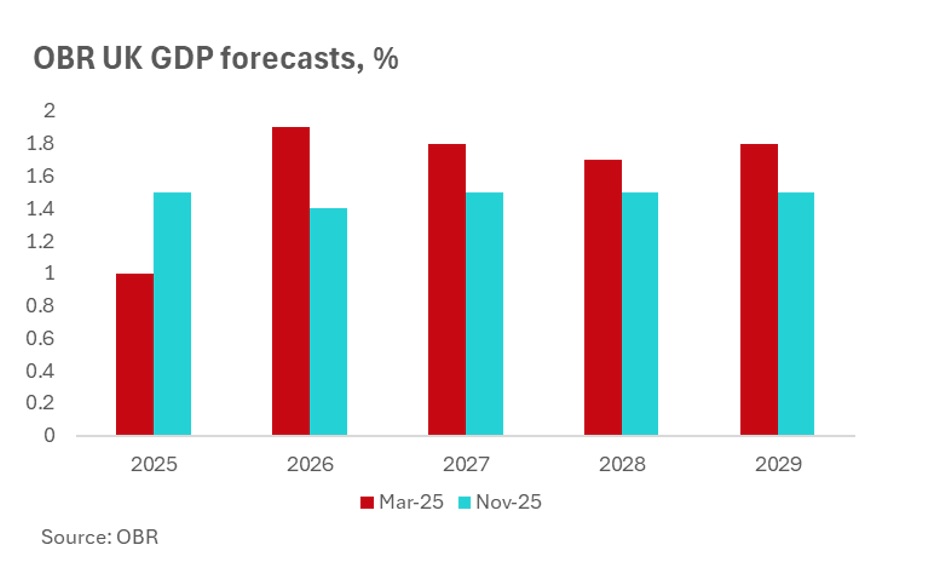
In terms of economic forecasts, the OBR raised its estimate for UK GDP growth in 2025 from 1% to 1.5% but lowered its forecasts for future years (see chart, below) amid greater caution on the outlook for productivity growth.
In terms of inflation, the OBR now sees it returning to the Bank of England’s target by 2027, one year later than previously forecast. Despite the sharply rising tax burden, government debt as a share of GDP is expected to remain elevated at over 95% throughout the forecast horizon.
All in all, the Chancellor will be hoping that her greater fiscal headroom after today’s Budget should reduce the need for another damaging round of tax rises in the future, although that is still not completely clear. There remains a lot of uncertainty about the impacts of the tax rises, and regarding the UK’s future productivity performance and developments in the global economy and financial markets. The OBR’s more pessimistic growth forecasts could still ultimately prove too optimistic.
