


According to a new report, it’s no longer a future bet—it is a present-day imperative. Organisations across every sector are recognising its role in achieving net zero and sustainability goals. But readiness to act varies widely. This research shows both the momentum and the challenges in embedding climate technologies, with accountants playing a pivotal role in bridging the gap between aspiration and action.
Climate technology is transforming industries, creating opportunities, and driving investment. While only 15% of organisations currently invest with clear financial or strategic rationale, growing interest is seen in cautious investment (42%) and non-financial returns like ESG and brand value (21%). Energy efficiency, carbon compliance, and sustainable supply chains are leading adoption, with green finance, carbon offsetting, and climate risk planning emerging as strategic priorities.
Climate technology is transforming industries, creating opportunities, and driving investment. While only 15% of organisations currently invest with clear financial or strategic rationale, growing interest is seen in cautious investment (42%) and non-financial returns like ESG and brand value (21%). Energy efficiency, carbon compliance, and sustainable supply chains are leading adoption, with green finance, carbon offsetting, and climate risk planning emerging as strategic priorities.
Areas of climate technology organisations are investing in
- 55% Energy efficiency and cost reduction
- 36% Carbon reporting and compliance
- 36% Sustainable supply chain management
- 31% Green finance and sustainable investment
- 24% Carbon management and offsetting
- 21% Future planning and climate risk management
The research underscores a significant readiness gap. Data remains the single biggest barrier: 72% of organisations struggle with fragmented or inconsistent information, weak governance, or insufficient knowledge. Even when data is collected, 20% say they cannot interpret outputs, while 15% cannot measure ROI from investments.
What are your organisation's top three challenges in adopting climate technology?
- 34% Limited internal capability or expertise
- 31% High cost
- 24% Climate-related data is fragmented, inconsistent, or managed manually
- 24% Lack of clear data governance or ownership
- 24% Insufficient knowledge about climate technology
- 20% Difficulty interpretating or acting on outputs from climate tech
- 15% Challenges in measuring the return on investment.
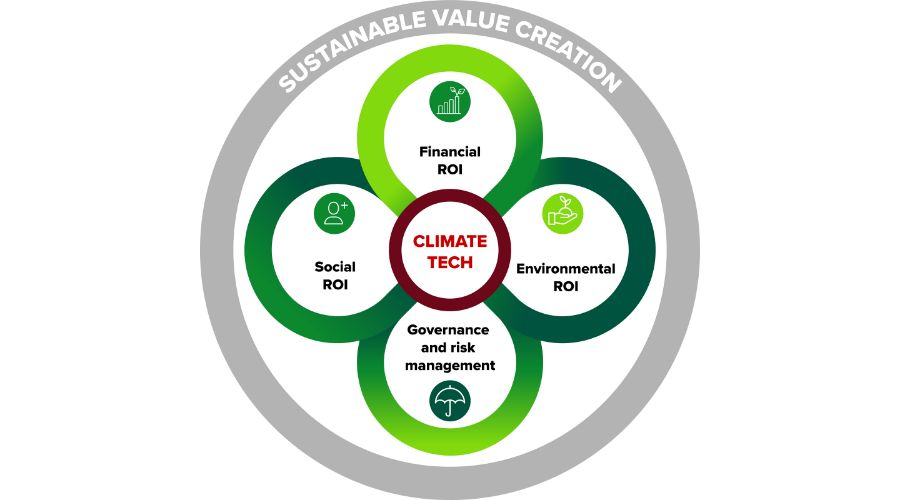
Government support—through policy, tax incentives, and skills development—is essential, with 77% of organisations citing it as a key driver. By combining strong data, strategic oversight, and supportive public policy, accountants can help organisations scale climate technology, rethink ROI, and create long-term sustainable value.
The research also includes the Climate Tech Readiness Toolkit - a practical guide for finance teams and business leaders. It provides checklists, diagnostic questions, and investment mapping tools to test data quality, system integration, and value creation.