

Part 2 of 4
This is the Finance Act 2025 version of this article. It is relevant for candidates sitting the ATX-UK exam in the period 1 June 2026 to 30 June 2027. Candidates sitting STA-UK after 30 June 2027 should refer to the Finance Act 2026 versions of the articles (to be published on the ACCA website in 2027).
In the first part of this article we looked at some basic rules concerning the international aspects of income tax (IT), capital gains tax (CGT) and inheritance tax (IHT) and reviewed residence status. The remaining parts of this article look at the three personal taxes in more detail together with the foreign income and gains (FIG) regime for qualifying new residents.
Overseas income
The starting point when considering the taxation of overseas income is the individual’s tax residence position. Figure 2 sets out an individual’s liability to UK income tax in respect of overseas investment income and trading income.
Figure 2 – UK IT on overseas investment income and trading income
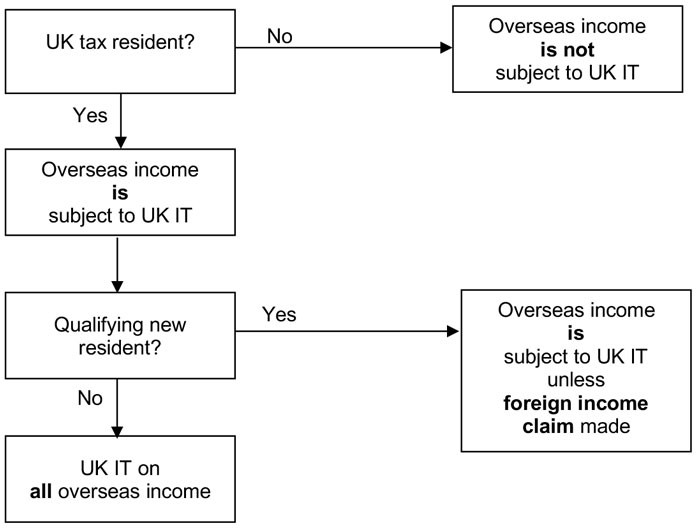
Figure 2 relates to the taxation of overseas investment income and trading income only. It has already been recognised that UK source income is always subject to UK IT regardless of the individual’s tax status. Overseas employment income is considered below.
Note the following:
- Where an individual IS NOT UK TAX RESIDENT, overseas income is not subject to UK IT. There is no need to consider a foreign income claim under the FIG regime.
- Where an individual IS UK TAX RESIDENT, overseas income is subject to UK IT. If the individual is also a qualifying new resident, a foreign income claim may be made meaning that the overseas income is not taxable.
An overview of the FIG regime is provided in Part 3 of this article.
Figure 3 sets out an individual’s liability to UK IT in respect of overseas employment income, ie income in respect of overseas duties.
Figure 3 – UK IT on overseas employment income
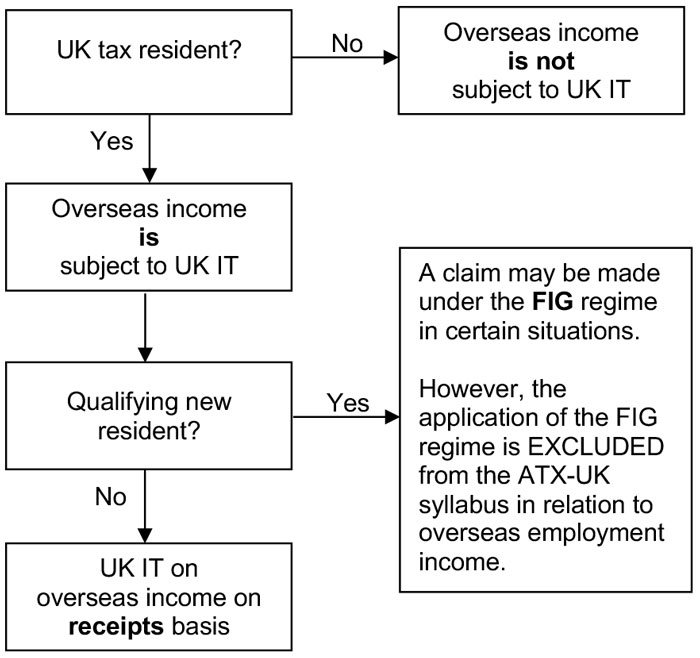
Figure 3 relates to the taxation of overseas employment income only. You should note that the FIG regime in relation to overseas employment income is not examinable.
Liability to UK CGT
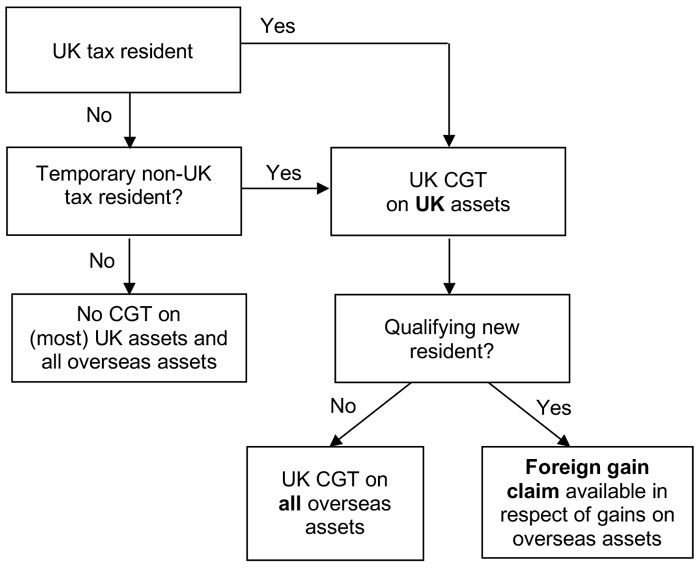
The key factor in determining an individual’s liability to UK CGT is tax residence. Whether an individual is also a qualifying new resident is relevant where the UK tax resident individual has realised gains on the disposal of overseas assets. Figure 4 sets out the liability of an individual to UK CGT on both UK and overseas assets.
Figure 4 – Liability to UK CGT
Note the following:
- To be outside of UK CGT, an individual must be non-UK tax resident and must not be a temporary non-UK tax resident.
- UK CGT applies to worldwide assets. Once an individual is subject to UK CGT it is then necessary to consider whether the person is a qualifying new resident to determine the treatment of gains on overseas assets.
- The rules set out in Part 3 of this article in respect of the FIG regime can apply to chargeable gains as well as to income.
- An individual who is non-UK tax resident is still subject to UK CGT on disposals of:
- UK assets used in a trade based in the UK; and
- land and buildings situated in the UK
but not on any other assets.
The rules for temporary non-UK tax residents were introduced in order to prevent individuals avoiding UK CGT by going abroad for a relatively short period of time, becoming non-UK tax resident and then selling assets outside the scope of UK CGT. The rules apply to individuals:
- who have been UK tax resident for at least four of the seven tax years prior to the year of departure, and
- who leave the UK for a period of five years or less.
Gains made on assets owned at the time of leaving the UK, but sold whilst the individual is outside of the UK, remain subject to UK CGT. Gains on assets purchased after leaving the UK and sold whilst the individual is outside of the UK are NOT subject to UK CGT.
Example 1 – Bosun
Bosun has always been UK tax resident. On 1 June 2024 he left the UK and became non-UK tax resident. His intention was to remain outside of the UK for four years. In 2026/27 Bosun sold some shares (acquired in 2018), and a painting (acquired in 2026).
Bosun’s liability to UK CGT following his departure from the UK is as follows:
- Bosun is not tax resident in the UK. Accordingly, he will not be subject to UK CGT unless he is caught by the rules for temporary non-UK tax residents.
- If Bosun returns to the UK as planned he will have been outside the UK for less than five years and will therefore be a temporary non-UK tax resident. The gain on the shares will be taxed in the year he returns.
- If he is non-UK tax resident for more than five years, the gain on the shares will not be subject to UK CGT.
- The gain on the painting will not be subject to UK CGT regardless of when Bosun returns to the UK because it was acquired after Bosun left the UK.
Conclusion
Diagrams are useful in this area of taxation as they provide a clear structure of the method required to identify an individual’s tax position. When you learn these rules, make sure that you learn them as part of a coherent whole and not as a list of unrelated points.
Written by a member of the ATX-UK examining team
The comments in this article do not amount to advice on a particular matter and should not be taken as such. No reliance should be placed on the content of this article as the basis of any decision. The authors and the ACCA expressly disclaim all liability to any person in respect of any indirect, incidental, consequential or other damages relating to the use of this article.
